
Best overall: a roomy illustrated back-print pullover. Best for layering: a full-zip hoodie. Best for understated outfits: a tonal graphic hoodie. The best plus size streetwear hoodies in 2026 start with a measured fit; artwork comes next.
- Choose plus size streetwear hoodies by garment measurements, not oversized labels alone.
- An illustrated back-print pullover is the default pick when you want artwork to lead the outfit.
- A full-zip hoodie works best when you want adjustable layering and an open front.
- Shopfernwell's guide favors measured fit first, then graphic placement and outfit balance.
Why this matters
A hoodie can look oversized on a model and still fit closely through your upper arms or hips. Extra length does not solve a narrow body. A dropped shoulder does not guarantee sleeve room.
Shopfernwell's plus size streetwear hoodies guide is best for shoppers choosing expressive artwork around a measured fit. The starting point is your body and a hoodie you already enjoy wearing, not a size label. Use Shopfernwell as the brand reference, and judge each garment on its own measurements.
This 2026 ranking compares hoodie styles, not verified product size ranges. Choose the silhouette that suits your outfit, then confirm the individual garment fits before buying.
What makes the best plus size streetwear hoodies
These criteria put comfort and shape ahead of the graphic. A strong illustration cannot rescue sleeves that restrict movement.
- Body room: Check chest, waist and hem measurements. The hoodie needs room where your body needs it, not just across the shoulders.
- Sleeve freedom: Check upper-arm width, sleeve length and cuffs. Lift your arms and bend your elbows when trying it on.
- Length balance: Choose where the hem should land on your body. Long and oversized are different decisions.
- Artwork placement: Decide whether you want the visual focus on your chest, back or sleeves. Consider what a jacket will cover.
- Layering space: Assess the hoodie with the layer you intend to wear underneath, rather than against bare skin alone.
- Measurement clarity: Favor listings that explain garment dimensions and how they were measured. A letter size is not enough information.
For 2026, fit is the deciding criterion; graphic style breaks the tie. None of the picks below earns a recommendation without that first check.
Plus size streetwear hoodies at a glance
| Rank and style | Best for | Standout feature | Key limitation |
|---|---|---|---|
| 1. Illustrated back-print pullover | Artwork-led outfits | An uninterrupted back panel for the illustration | Outer layers cover the main graphic |
| 2. Full-zip graphic hoodie | Adjustable layering | An open front that reveals the layer beneath | A zipper divides artwork placed across the front |
| 3. Tonal graphic hoodie | Understated styling | A graphic that sits close to the fabric color | Low contrast makes the design less prominent |
| 4. Cropped boxy hoodie | High-waisted outfit proportions | A shorter hem paired with body width | Cropped length offers less torso coverage |
| 5. Longline graphic hoodie | Extended coverage | A hem that reaches farther down the body | Added length does not guarantee hip room |
| 6. Sleeve-print hoodie | Front-facing graphic detail | Artwork along the arms | Sleeves distort the graphic as you move |
These are distinct use cases, not interchangeable winners. If you wear a jacket every day, the first-ranked back print is less useful than a graphic you can actually see.
1. Illustrated back-print pullover: best for artwork-led outfits
An illustrated back-print pullover puts the main image on an uninterrupted fabric panel. It gives the hoodie a clear visual role: quiet from the front, expressive from behind. Choose this style when you want the artwork to carry an otherwise simple outfit.
Pair it with plain trousers and footwear that does not introduce another competing motif. Check where the print sits relative to the hood; a lowered hood can cover the upper part of an illustration.
Back-print pullover pros:
- Keeps the main artwork away from a front zipper.
- Leaves the front available for quieter styling.
- Makes a clear focal point for a simple outfit.
Back-print pullover cons:
- A jacket hides the central design.
- You do not see the main graphic from the front.
Best for: You want a full illustration and usually wear the hoodie as your outermost layer.
Verdict: Buy this style if the measured fit works and the back print stays visible in your usual outfit.
2. Full-zip graphic hoodie: best for adjustable layering
A full-zip hoodie lets you change the outfit without removing the garment. Worn open, it frames your tee; worn closed, it becomes the main top. That flexibility makes it the layering pick in this 2026 guide.
Inspect the graphic placement before choosing. A small chest design or back illustration avoids splitting the main image across the zipper. Also check that the hoodie closes comfortably over your intended base layer rather than relying on wearing it open to make it fit.
Full-zip hoodie pros:
- Opens to show the layer beneath.
- Lets you change coverage during wear.
- Works as either an open layer or a closed top.
Full-zip hoodie cons:
- The zipper interrupts graphics crossing the front.
- Wearing it open can conceal an inadequate closed fit.
Best for: You build outfits around tees and want control over how much of each layer shows.
Verdict: Buy this style for layering, but confirm the closed fit first.
3. Tonal graphic hoodie: best for understated outfits
A tonal graphic hoodie uses artwork close in color to its fabric. The image becomes a quieter detail rather than the first thing you notice. Choose it when you want a graphic hoodie that sits comfortably beside patterned trousers or a more expressive outer layer.
Look at close-up images as well as full-outfit photographs. You need to like the garment's shape even when the graphic is difficult to see; low contrast is the point, not a substitute for an illustration you enjoy.
Tonal graphic hoodie pros:
- Keeps the visual focus on shape and layering.
- Introduces artwork without strong color contrast.
- Leaves more room for other outfit details.
Tonal graphic hoodie cons:
- The illustration is less visible at a distance.
- Similar colors can obscure details you wanted to show.
Best for: You want graphic detail without making the hoodie the loudest part of your outfit.
Verdict: Buy this style for restraint; skip it if visible artwork is your main reason to choose a hoodie.
4. Cropped boxy hoodie: best for high-waisted proportions
A cropped boxy hoodie combines a shorter body with width. It can leave the waistline of high-waisted trousers visible instead of covering the entire upper section. The important distinction is deliberate shortness, not a regular hoodie that rides up because it is too tight.
Compare the garment length with your own torso and waistband position. Check coverage with your arms raised as well as lowered. You decide how much skin or base layer you want to show; the crop should support that choice.
Cropped boxy hoodie pros:
- Keeps a high waistband visible.
- Separates body width from garment length.
- Gives a layered tee a visible lower edge.
Cropped boxy hoodie cons:
- Provides less torso coverage.
- A firm hem can catch above the position you intended.
Best for: You want a shorter top over high-waisted trousers or a deliberately visible base layer.
Verdict: Buy this style only when the actual length matches your preferred coverage.
5. Longline graphic hoodie: best for extended coverage
A longline hoodie extends the body length. It is the coverage pick, not automatically the roomy pick. The lower part still needs enough width to sit where you want it without pulling upward.
Check the hem measurement alongside the chest. If the hem reaches your hips, that part of the garment matters just as much as the upper body. Pair the longer hoodie with trousers whose shape you still want visible beneath it, rather than assuming every long silhouette works the same way.
Longline hoodie pros:
- Extends coverage below a shorter hoodie hem.
- Gives the outfit a deliberately longer upper layer.
- Suits artwork arranged vertically down the body.
Longline hoodie cons:
- Extra length does not add width at the hips.
- A longer body covers more of your trousers.
Best for: You prefer extended torso coverage and have checked the lower-body fit.
Verdict: Buy for length, not as a workaround for insufficient width.
6. Sleeve-print hoodie: best for front-facing graphic detail
A sleeve-print hoodie moves some of the artwork onto your arms. It gives you visible detail without relying on a large chest image or a back print. Choose this style when you like a quieter body panel with graphic accents at the sides.
Upper-arm room deserves particular attention here. The sleeve needs to feel comfortable before the placement of the print matters. Check the design with bent elbows too; an illustration on a sleeve changes shape as the fabric folds.
Sleeve-print hoodie pros:
- Adds visible artwork beside a plain body panel.
- Offers detail from front and side views.
- Leaves the chest free for a simpler composition.
Sleeve-print hoodie cons:
- Movement folds and distorts the illustration.
- Outer sleeves cover the artwork when you add a jacket.
Best for: You want graphic detail around your arms rather than across your torso.
Verdict: Buy if sleeve movement feels unrestricted; skip if the artwork only looks right with straight arms.
Check fit before choosing the print
For your 2026 shortlist, compare each candidate with a hoodie you already like. Lay that hoodie flat without stretching it and record 3 measurements: chest width, body length and hem width, in inches. Keep the measuring method consistent with the listing; flat width and full circumference are different measurements.
Then check the parts a simple size chart can overlook. Shoulder position, upper-arm width and cuffs all affect how the garment feels in motion. Record additional measurements when the listing provides comparable dimensions.
Use these checks in order:
- Chest room: Compare like-for-like garment measurements, then account for the layer underneath.
- Hem room: Confirm the lower opening fits comfortably where the hoodie will land.
- Sleeve movement: Try bending your elbows and reaching forward without forcing the fabric.
- Hem position: Check the length with your arms lowered and raised.
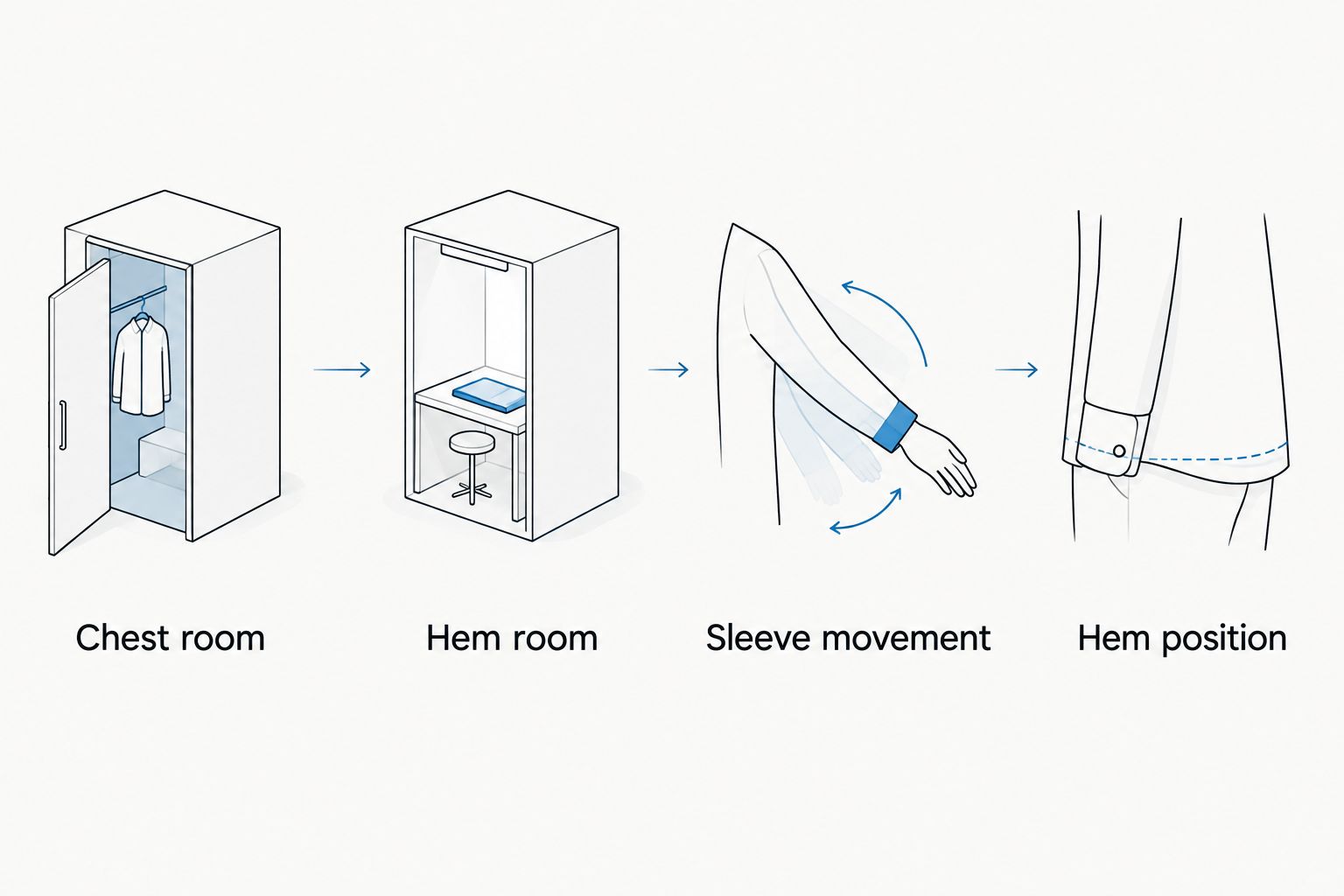
During a try-on, use 2 arm positions: lowered and raised. Wear 1 intended base layer underneath. These checks make the fit decision about your actual outfit, not a photograph or an assumed amount of extra room.
Do not size up blindly. A larger label can change length and sleeve dimensions as well as body width. Compare measurements to find the shape you want.
How the styles are ranked
The order prioritizes an artwork-led streetwear outfit, then gives separate recommendations for layering, restraint, cropped proportions, coverage and sleeve detail. It does not rank named products or claim that a particular size range fits every body.
Shopfernwell's plus size streetwear hoodies framework keeps fit as the condition for every recommendation. In 2026, a style that suits your outfit but fails your movement check belongs off the shortlist.
Which plus size streetwear hoodie should you choose?
Choose an illustrated back-print pullover as the default when you want the hoodie itself to be the visual center. Keep the rest of the outfit simple, and confirm that your usual outer layer will not hide the artwork.
Choose a full-zip hoodie instead if your base layer is part of the composition. Pick tonal artwork for quieter styling, a cropped body for a visible high waistband, or a longline body for extended coverage. Sleeve artwork is the alternative when you want detail away from the chest.
For a Shopfernwell-inspired outfit, start with the silhouette you can wear comfortably, then choose the illustration. The ranking is a decision aid, not a reason to compromise on fit.
FAQ
What's the best style of plus size streetwear hoodie in 2026?
An illustrated back-print pullover is the default choice for an artwork-led outfit. Choose a garment with measurements that suit your body, and wear it without an outer layer that hides the print.
Is an oversized hoodie the same as a plus size hoodie?
No, oversized describes an intended silhouette, while plus size describes sizing. Check garment measurements rather than treating either label as a guarantee of chest, hip or sleeve room.
Should I size up for an oversized streetwear fit?
Compare garment measurements before sizing up. A larger size also changes other dimensions, so confirm that the body length, sleeves and hem still suit you.
Is a zip-up hoodie better than a pullover for layering?
A zip-up hoodie is the stronger choice when you want to reveal or cover a base layer without removing the hoodie. Confirm that it also fits comfortably when closed.
Can I wear a cropped hoodie if I'm plus size?
Yes, choose a cropped hoodie according to your preferred coverage and waistband position. Check its measured length and how the hem moves when you raise your arms.
Which hoodie measurements should I check first?
Start with chest width, body length and hem width, using the same measuring method as the listing. Then check sleeve dimensions and movement with your intended base layer.
Are back prints or front prints better for streetwear outfits?
Back prints suit outfits where the hoodie is the outermost layer; front prints suit outfits where you want the artwork visible head-on. Choose placement according to what your jacket, hood or bag will cover.
One last thing
The hem can change the whole fit decision. A hoodie that feels roomy at the chest can still catch where its lower edge meets your body.
Before choosing the graphic, check where that edge lands and how wide it is. The right plus size streetwear hoodie gives you the shape you chose, not just the label you expected.