
Best overall: an illustrated back-print hoodie. Best for layering: a graphic zip-up. Best for a defined waistline: a cropped boxy hoodie. This 2026 guide ranks the best streetwear hoodies for women by artwork, silhouette and outfit context, with Shopfernwell as the starting point for artful streetwear.
- The best streetwear hoodies for women balance artwork placement with a silhouette you actually want to wear.
- An illustrated back-print hoodie is the default choice when you want the artwork to lead.
- A graphic zip-up works best for layering; a cropped boxy hoodie emphasizes the waistline.
- Shopfernwell serves fashion-focused shoppers seeking urban, artful streetwear.
Why this matters
A hoodie changes more than the top half of an outfit. Its hem decides where the waist appears; its sleeves set the volume; its artwork decides where your eye lands. Choose those details deliberately.
For your 2026 wardrobe, start with the outfit you repeat most often rather than a design that only works in a product photograph. Straight jeans, wide trousers and a fitted skirt each ask something different of a hoodie. The best choice is the one that makes those existing pieces feel intentional.
Shopfernwell's streetwear focus puts graphic hoodies in an artful context. This ranking follows that direction without treating every hoodie as interchangeable: a large back illustration and a small chest mark do different jobs.
What makes the best streetwear hoodie for women
Use these criteria before you compare styles. A striking print does not compensate for a hem or sleeve shape you dislike.
- Artwork placement: Decide whether you want the focal point at the chest, across the back or along the sleeves. Consider what a jacket will cover.
- Silhouette: Separate width from length. A roomy body can have a short hem; a long hoodie does not automatically have a boxy shape.
- Layering access: A zip-up lets you show the layer underneath. A pullover gives the front a continuous surface.
- Outfit balance: Match the hoodie's volume to the shape of your trousers or skirt. Contrast is an option, not a requirement.
- Repeat wear: Picture the hoodie with your usual outerwear, bag and shoes. Artwork that suits only one outfit is a narrower choice.
Treat fit and artwork as separate decisions. First choose the silhouette. Then choose the image you want to wear within it.
Best streetwear hoodies for women at a glance
These are style recommendations, not a ranking of named products. Each option has a distinct role, so the order reflects outfit usefulness rather than a claim about construction or durability.
| Rank | Hoodie style | Best for | Standout detail | Key limitation |
|---|---|---|---|---|
| 1 | Illustrated back-print pullover | Artwork-led everyday outfits | Large visual surface across the back | Outerwear covers the main image |
| 2 | Graphic zip-up | Adjustable layering | Open front frames the layer underneath | A zipper interrupts artwork crossing the front |
| 3 | Cropped boxy hoodie | A defined waistline | Short hem paired with body width | Less torso coverage |
| 4 | Oversized front-print pullover | Relaxed volume | Roomy outline with visible front artwork | Excess length can obscure the waist |
| 5 | Minimal chest-graphic hoodie | Outfits with another focal point | Small, contained artwork | Less visual impact on its own |
| 6 | Sleeve-print hoodie | Layered detail | Artwork away from the center front | Jackets conceal the sleeve design |
1. Illustrated back-print pullover: best for artwork-led outfits
An illustrated back-print hoodie gives the image a broad, uninterrupted area. From the front, the outfit can stay quiet; from behind, the artwork becomes the statement. That contrast is the reason it takes the overall slot in this 2026 ranking.
Start with straight jeans or uncomplicated trousers. You do not need to repeat the illustration's subject elsewhere in the outfit. A plain lower half gives the drawing room to register.
Back-print pullover pros:
- Gives an illustration space without a front zipper dividing it.
- Keeps the front of the outfit visually restrained.
- Works as the main artwork when the hoodie is your outer layer.
Back-print pullover cons:
- A jacket covers the central feature.
- A backpack can obscure part of the image.
Best for: You want the hoodie itself to carry the outfit's artwork.
Inspect where the illustration ends relative to the hood and hem. If the image sits close to the hood, judge it with the hood resting down, not only stretched flat.
Verdict: Buy this style when you usually wear your hoodie uncovered. Skip it when a jacket or backpack hides the artwork most days.
2. Graphic zip-up: best for adjustable layering
A graphic zip-up lets you change how much of the underneath layer remains visible. Worn open, it creates a frame around a tee or fitted top. Closed, it becomes a more contained upper-body shape.
Choose artwork that you like with the zipper both open and closed. A design crossing the center front breaks apart when you unzip it; separate chest or back artwork avoids that particular interruption.
Graphic zip-up pros:
- Lets you reveal or conceal the underneath layer.
- Gives you open-front and closed-front outfit options.
- Makes a fitted base layer visible without removing the hoodie.
Graphic zip-up cons:
- The zipper divides any artwork running across it.
- An open hoodie changes the intended relationship between front graphics.
Best for: You build outfits around layers rather than a single uninterrupted graphic.
Try the hoodie with the tee length you already wear. A visible tee hem can be deliberate, but it should not be an accidental leftover beneath the hoodie.
Verdict: Buy this style for layering. Skip it if your priority is an uninterrupted front illustration.
3. Cropped boxy hoodie: best for a defined waistline
A cropped boxy hoodie combines a shorter body with a wider outline. It lets the waistband remain part of the outfit rather than hiding it beneath a long hem. The effect comes from proportion, not simply choosing a smaller size.
Pair it with high-rise trousers when you want the waistline to connect the upper and lower halves. With a lower waistband, the same hoodie creates a different amount of separation. Choose that relationship intentionally.
Cropped boxy hoodie pros:
- Keeps the waistband visible.
- Adds upper-body width without the same body length as a long hoodie.
- Gives wide trousers a clearly defined starting point.
Cropped boxy hoodie cons:
- Provides less torso coverage than a longer cut.
- Can expose the underneath layer when you reach upward.
Best for: You want a roomy top without losing the waistline.
Check the hem while sitting as well as standing. A cropped cut that looks right in a mirror still needs to feel right during ordinary movement.
Verdict: Buy this style for waist definition. Skip it if uninterrupted torso coverage is essential.
4. Oversized front-print pullover: best for relaxed volume
An oversized front-print pullover makes the upper half of the outfit visibly roomy. The artwork stays in view when you face someone, while the body shape supplies the relaxed outline. Width, length and sleeve volume all contribute.
For a 2026 outfit built around this shape, decide which element leads: the print or the volume. A dense illustration and a very long body compete for attention in different ways. You do not have to maximize both.
Oversized front-print pullover pros:
- Keeps the graphic visible from the front.
- Creates a deliberately roomy silhouette.
- Gives fitted bottoms a strong shape contrast.
Oversized front-print pullover cons:
- A long hem can conceal the waistband.
- Sleeve volume can bunch beneath a close-fitting jacket.
Best for: You want the hoodie's outline to matter as much as its illustration.
Compare the shape with a hoodie you already enjoy wearing. Do not assume that sizing up reproduces the proportions of a deliberately oversized pattern.
Verdict: Buy this style for visible volume. Skip it if you want a compact layer under fitted outerwear.
5. Minimal chest-graphic hoodie: best beside another focal point
A minimal chest-graphic hoodie keeps its artwork in a small, contained area. It leaves more of the garment visually quiet. That makes it a clear choice when patterned trousers, a textured skirt or a distinctive bag already leads the outfit.
The drawback is the same restraint that makes it useful. If you want a hoodie to feel like a wearable illustration, a small chest mark does less of that work.
Minimal chest-graphic hoodie pros:
- Leaves visual room for another statement piece.
- Keeps the central artwork easy to locate.
- Supports an outfit built around shape rather than a large image.
Minimal chest-graphic hoodie cons:
- Offers less artwork to look at than a large illustrated print.
- A bag strap can cover the small focal point.
Best for: Your trousers, skirt or accessories already supply the main detail.
Verdict: Buy this style to support another focal point. Skip it when you want the hoodie to be the artwork.
6. Sleeve-print hoodie: best for detail away from the torso
A sleeve-print hoodie moves the artwork toward the arms. It gives you detail without requiring a large image across the chest or back. The design also changes position as you bend or cross your arms.
Look at the sleeves in a resting pose, not only held outward. You want to like the visible fragments as well as the complete design.
Sleeve-print hoodie pros:
- Keeps the center front less visually busy.
- Adds artwork to a different part of the silhouette.
- Suits outfits where the torso already carries another detail.
Sleeve-print hoodie cons:
- Outerwear covers the sleeve artwork.
- Folded or pushed-up sleeves conceal parts of the design.
Best for: You want graphic detail without a central illustration.
Verdict: Buy this style when the sleeves stay visible. Skip it if you routinely cover or roll them.
Check the fit before choosing the artwork
Use 3 measurements from a hoodie you already like: chest width, body length and sleeve length. Compare them with the measurements provided for the garment you are considering, using the same measuring method. A familiar size label alone does not describe the silhouette.
- Chest width: Decide how much room you want through the body.
- Body length: Decide whether the hem should reveal or cover your waistband.
- Sleeve length: Decide where you want the cuff to sit with your arms relaxed.
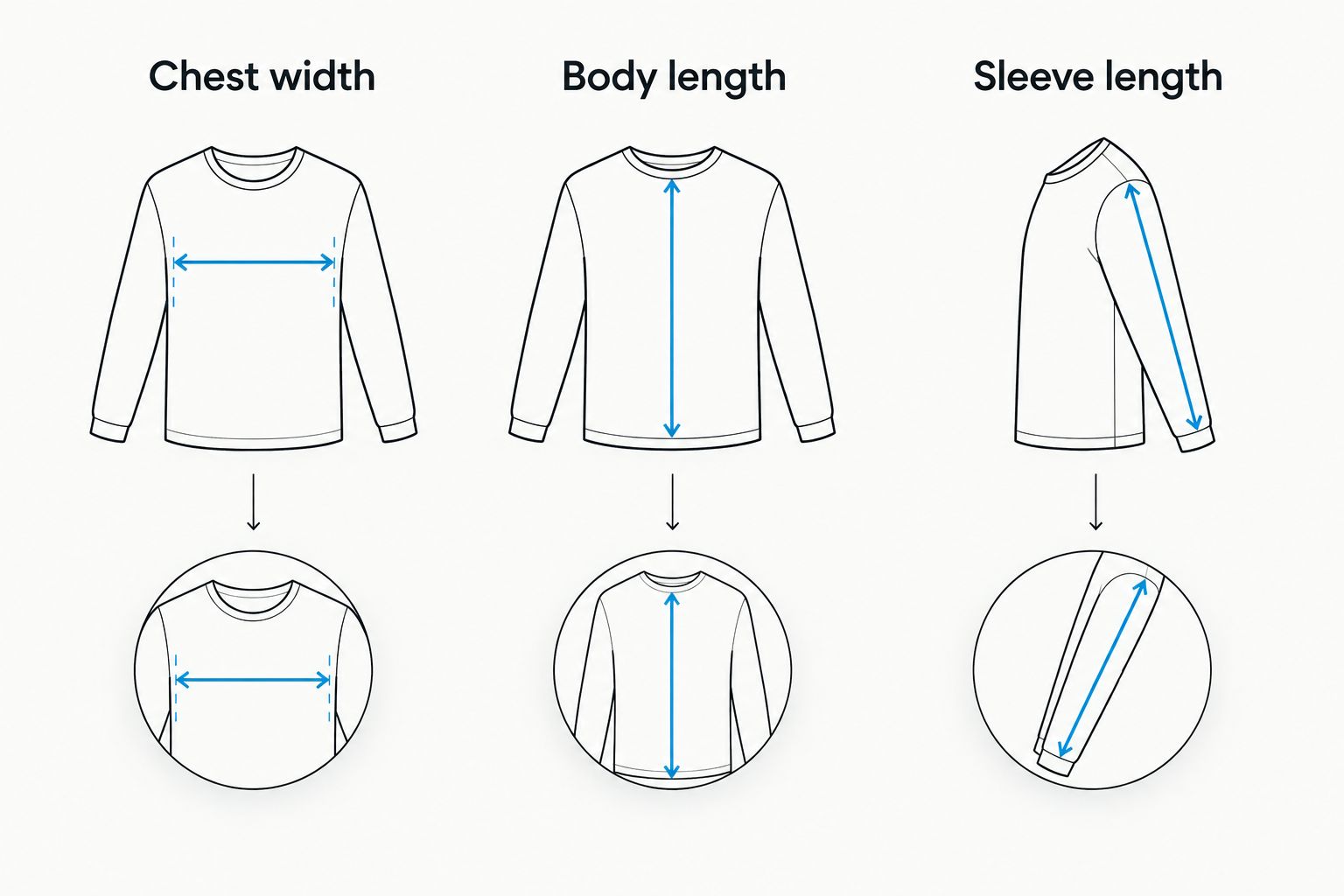
Finish with 2 outfit checks: arms relaxed, then arms raised. Look for a hem position and sleeve behavior you are comfortable wearing. These checks help you distinguish a shape you enjoy from a shape that only looks appealing when perfectly arranged.
Build the outfit around the hem
The hem is the connection between the hoodie and the rest of the outfit. A cropped hoodie shows where the trousers begin; a longer hoodie covers that transition. Neither is automatically more flattering. They simply organize the silhouette differently.
The same proportion choice appears in cropped boxy tees for women: a shorter top leaves the waistband visible, while a longer layer hides it. With a hoodie, consider the sleeves and hood as well, because those shapes add visual volume beyond the body.
Use 1 graphic focal point as your starting rule. An illustrated hoodie with plain trousers gives the image a clear role. If you add another print, choose it deliberately rather than matching every available detail.
For a roomy pullover, try straight trousers before changing the whole outfit. For a cropped hoodie, assess the waistband and hem together. For a zip-up, look at the visible base layer as part of the finished composition, not an afterthought.
How this ranking works
The 2026 ranking prioritizes artwork placement, silhouette, layering access, outfit balance and repeat wear. The illustrated back-print pullover wins the default slot because it gives the artwork a clear role while leaving the front restrained. The other styles win narrower, distinct uses.
This is a style ranking, not a wear-test verdict. It does not assign fabric quality, print durability or garment construction to a silhouette. Check those details separately for the actual hoodie you choose.
Shopfernwell's graphic streetwear direction informs the artwork-led angle. The recommendation remains simple: choose the shape for your outfit, then choose the illustration within that shape.
Which streetwear hoodie should you choose?
Choose an illustrated back-print pullover if you are undecided and usually wear your hoodie as the visible outer layer. It gives the artwork a defined purpose without requiring a busy front.
Choose a graphic zip-up when your outfits depend on layers. Choose a cropped boxy hoodie when the waistband is part of the look. Neither is a runner-up in its own use case.
For your 2026 wardrobe, the deciding question is not which hoodie looks most dramatic alone. It is which hoodie completes the outfit you actually wear.
FAQ
What's the best streetwear hoodie for women in 2026?
An illustrated back-print pullover is this guide's best overall style for artwork-led outfits. Choose a graphic zip-up instead when layering matters more, or a cropped boxy hoodie when you want the waistband visible.
Is an oversized hoodie better than a cropped hoodie?
An oversized hoodie is better for relaxed volume; a cropped hoodie is better for keeping the waistline visible. Width and length are separate choices, so a hoodie can also be both roomy and cropped.
Should I size up to get an oversized streetwear fit?
Do not rely on sizing up alone to get your preferred oversized shape. Compare chest width, body length and sleeve length with a hoodie you already like, because a larger size also changes length and sleeve proportions.
Are graphic zip-ups better than pullovers for layering?
Graphic zip-ups are better when you want to show or conceal the underneath layer without removing the hoodie. Pullovers are better when you want an uninterrupted front surface for artwork.
What should I wear with an illustrated hoodie?
Start with plain trousers or jeans so the illustration has a clear role. Then judge the hem against the waistband and decide whether you want contrast or shared volume between the top and bottom.
Is a back print better than a front print?
A back print is better for a quiet front and a larger rear artwork area; a front print is better when you want the image visible face-to-face. A jacket or backpack can hide a back print, so consider what you wear over it.
Can I choose a unisex hoodie for a women's streetwear outfit?
Yes, choose a unisex hoodie by its measurements and silhouette rather than the label alone. Check the body and sleeve proportions against the fit you want, particularly when you prefer a shorter hem.
One last thing
Inspect a graphic hoodie with the hood resting down. The hood is part of the composition, not just an accessory; it can cover artwork near the upper back. Choose the image you like in the position you will actually wear it.